Portland is reeling from a remarkable revelation: the City has discovered roughly $106 million in previously unspent housing funds sitting inside the Portland Housing Bureau’s accounts — money that could be used for rent assistance, affordable housing production, homelessness services, and more. But before anyone celebrates this discovery, it has opened a whole new chapter of questions about financial oversight, accountability, and housing strategy in a city that has struggled for years to meet the scale of its housing needs.
How Did We Get Here?
The first hint of this story emerged late last year when City staff disclosed about $21 million tucked away inside the Housing Bureau’s budgets — funds that weren’t being spent and weren’t part of the public-facing annual budget discussions. Councilors quickly began debating how best to use that money to help renters and prevent evictions.
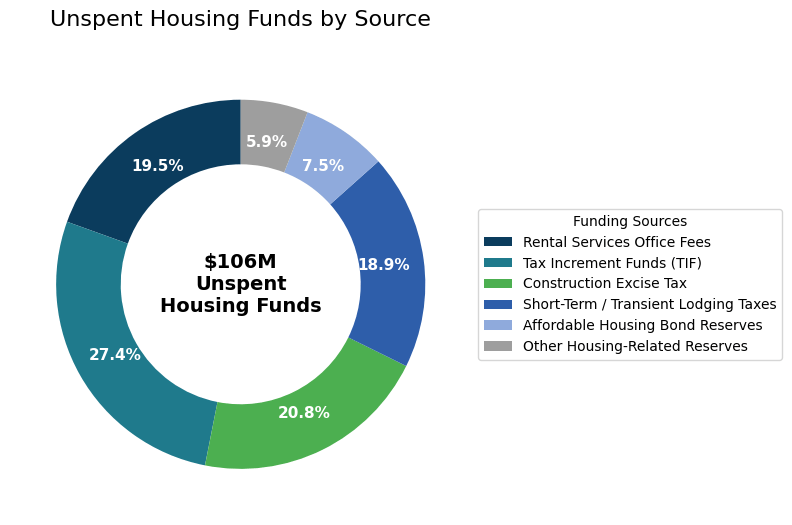
In follow-up reviews, city officials uncovered significantly more — now pegged at around $106 million — across multiple streams of revenue that accumulated over time and were not accounted for in centralized budget planning. These include:
Rental Services Office funds ($20.7M) from landlord registration fees
Short-term rental and Transient Lodging taxes (tens of millions) earmarked for housing programs
Tax Increment Funds ($29M) and Construction Excise Tax revenue ($22M) for affordable housing
Other smaller dedicated funds for housing projects and maintenance
Affordable Housing Bond admin dollars and property maintenance reserve
City Administrator Raymond Lee — who has been reviewing city finances since joining in late 2025 — says this accumulation was largely a function of how revenue streams were allowed to “accrue” over several years without clear coordination with overall budget planning. Under Portland’s prior government structure, bureaus built and managed budgets fairly autonomously, which Lee and others now say obscured a citywide view of available dollars.
A “Good Problem” — and a Financial Headache
Council President Jamie Dunphy called the discovery “a good problem to have,” but also acknowledged that it underscores deeper issues in budget transparency and public confidence.
To be clear: most of these funds are restricted by law or policy. That means they can’t simply flow into the city’s general fund to plug a looming $67 million budget shortfall — even though some city leaders, including Mayor Keith Wilson, have encouraged creative thinking about how to stabilize city services.
What can they be spent on? In theory, programs that help renters stay housed, affordable housing construction, homelessness services, and site-specific redevelopment initiatives — but these are the very services Portland has struggled to scale in the past decade as rents rise and supply shrinks.
What This Means for Portland’s Housing
Portland’s housing crunch didn’t start yesterday. Affordable apartment stock has dramatically shrunk, with lower-cost units disappearing, leaving many households spending a disproportionate share of their income on rent.
At the same time, local nonprofits and developers have pursued creative strategies — from converting market-rate buildings to affordable units to helping tenants become homeowners — but these efforts require more predictable funding and coordination.
Now, with more sizeable funds identified, key questions remain:
• How will City Hall, the Council, and community partners prioritize spending?
Councilors are still debating whether to focus first on rent assistance, eviction prevention, or long-term housing production. Each choice reflects a different philosophy about whether money should stabilize households now or build homes for the future.
• Will Portland fix its financial systems?
This episode has reignited calls to overhaul accounting systems and reporting structures so that budgets reflect reality — and so residents and advocates can hold officials accountable.
• What does this mean for community trust?
For Portlanders who have watched housing costs climb and homelessness rise, this discovery is frustrating — even if the money truly was “forgotten” rather than “hidden.” It highlights the gap between resources collected for housing and the pace of tangible results.
Closing Thoughts
Finding $106 million is significant on paper — especially in a city struggling to house its residents affordably — but the conversion of dollars into homes, services, and stability is where the real challenge lies.
That transition will require not just transparent budgeting, but bold policy decisions, community engagement, and a commitment to measurable outcomes for households at risk. Portland can use this moment to strengthen its housing system — but that depends on how leaders choose to invest this once-in-a-generation opportunity.
Further reading:

NWV Group – Manage. Build. Invest. Leading integrated real estate and property management services across the Portland metro area.
Check out other posts